


.png)
50 HR YIN YOGA TTC
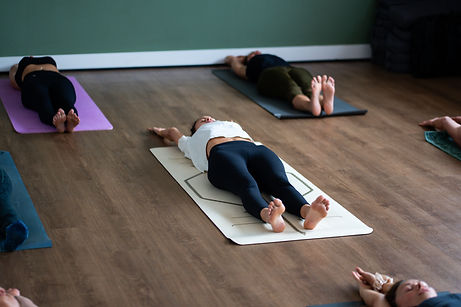
This 50-hour Yin Yoga Teacher Training is a spacious, in-depth and thoughtfully curated 6-day immersion into the practice of Yin. It invites you to slow down, listen deeply and explore the subtle yet powerful layers of the body and mind.
Yin Yoga is often described as a quiet practice but beneath the stillness lies a rich and complex landscape. This training offers a curious and embodied exploration of Yin: its philosophical roots, its relationship with the body’s connective tissues, and its deep connection to Traditional Chinese Medicine.
Whether you are newer to Yin or already teaching and wishing to deepen your understanding, this training provides a grounded, experiential foundation. You’ll leave with not only knowledge, but a felt sense of the practice, one that supports confident, authentic and intuitive teaching.

What You’ll Gain.
-
A comprehensive understanding of Yin Yoga theory and practice
-
Confidence in teaching Yin with clarity, depth and authenticity
-
Practical tools for sequencing, adapting and holding space
-
A deeper connection to your own body, breath and inner landscape
-
A certificate of completion contributing 50 hours of continued education
Topics Covered.
1.
The Principles & Philosophy of Yin Yoga
We’ll begin by exploring what defines Yin Yoga and what sets it apart from more dynamic practices.
You’ll gain a clear understanding of the core principles; time, stillness and sensation and why they matter, both physically and energetically.
This foundation will support you in practising and teaching with intention and integrity.
2.
Meridian Theory & Traditional Chinese Medicine
Yin Yoga is deeply influenced by Traditional Chinese Medicine (TCM). You’ll be introduced to the body’s meridian system, its energetic pathways and how specific Yin postures stimulate and support these channels. We’ll explore how energy (Qi) flows through the body and how Yin practice can help restore balance and vitality.
3.
Introduction to Five Element Theory
We’ll explore the Five Elements; Wood, Fire, Earth, Metal, and Water and how they relate to the organs, emotions, seasons, and overall wellbeing. You’ll learn how to thoughtfully integrate this wisdom into your classes, creating practices that feel aligned, seasonal and deeply nourishing.
4.
Functional Anatomy
No two bodies are the same, and Yin Yoga honours this truth. You’ll develop an understanding of functional anatomy, moving beyond aesthetic alignment to explore how individual skeletal variation influences movement. This approach empowers you to teach inclusively and adapt poses to suit every body.
5.
Fascia & Connective Tissue
Yin targets the deeper, denser tissues of the body, particularly fascia. You’ll learn about the role fascia plays in mobility, stability, and overall health and how longer-held postures can positively affect these tissues. This understanding will deepen both your practice and your teaching language.
6.
Anatomy in Practice
Through experiential sessions, we’ll explore a wide range of Yin postures. You’ll learn to recognise the difference between tension and compression and how to guide students safely within their own range. Emphasis is placed on intelligent adaptation, body awareness and sustainable practice.
7.
The Nervous System & the Yin Experience
Stillness can be powerful but it can also feel challenging. We’ll explore the role of the nervous system in Yin practice, including how to support regulation and resilience. This includes developing awareness around trauma sensitivity and neurodivergence, allowing you to hold space in a more informed and compassionate way.
8.
Sequencing with Intention
You’ll learn how to design Yin classes that are cohesive, meaningful and energetically balanced. We’ll explore different approaches to sequencing whether anatomical, meridian-based, or element-inspired, so you can create practices that feel purposeful and intuitive.
9.
Props & Adaptations
Props are an essential part of Yin Yoga. You’ll discover how to use bolsters, blocks, straps and blankets creatively to support a wide range of bodies and needs. The focus is on making the practice accessible, sustainable, and deeply supportive.
10.
Sound, Music & Atmosphere
The environment we create shapes the experience of Yin. We’ll explore how sound, silence and music can influence the quality of practice and how to cultivate an atmosphere that invites ease, introspection, and presence.
11.
The Art of Holding Space
Teaching Yin is as much about presence as it is about instruction. You’ll develop skills in holding space, reading the room and responding intuitively to your students. This is about cultivating authenticity, sensitivity and trust in your role as a teacher.